2026政府工作报告15--词汇版
- 2026-05-16 13:09:54
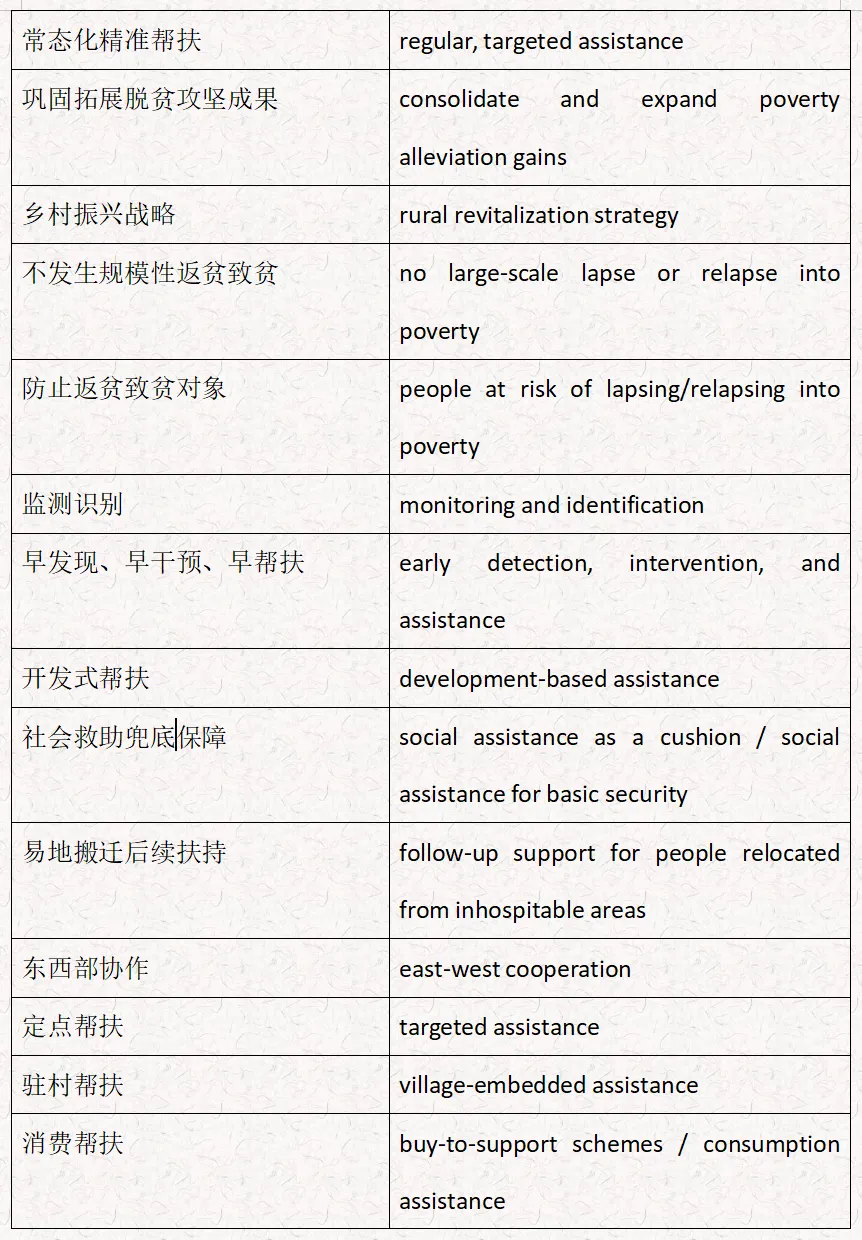
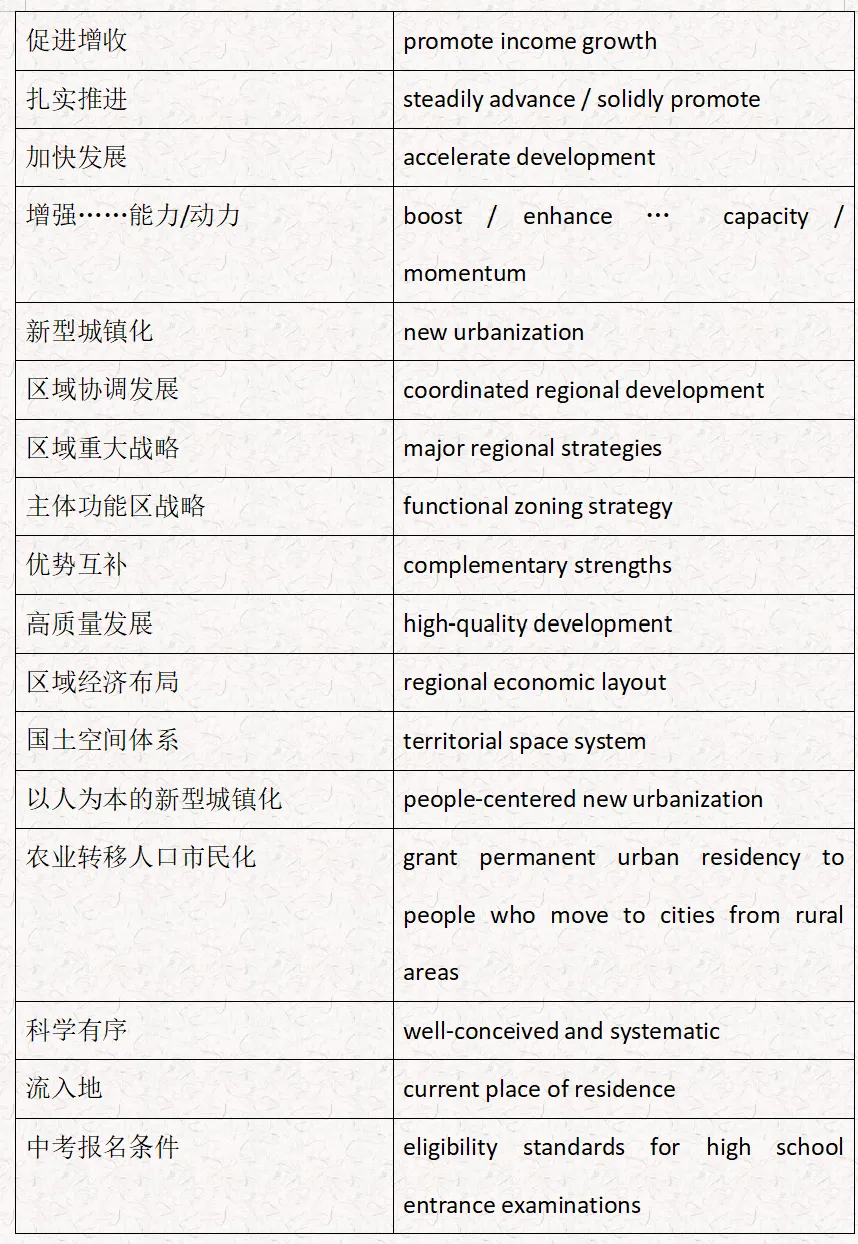
实施常态化精准帮扶。持续巩固拓展脱贫攻坚成果,把常态化帮扶纳入乡村振兴战略统筹实施,守牢不发生规模性返贫致贫底线。保持帮扶政策总体稳定。合理确定防止返贫致贫对象认定标准,做好监测识别,确保早发现、早干预、早帮扶。提高产业、就业等开发式帮扶实效,发挥社会救助兜底保障作用。继续做好易地搬迁后续扶持。完善东西部协作、定点帮扶、驻村帮扶和消费帮扶等。分层分类帮扶欠发达地区,支持乡村振兴重点帮扶县加快发展,增强内生动力。 | We will provide regular, targeted assistance. We will continue to consolidate and expand our poverty alleviation gains and carry out regular assistance programs under the rural revitalization strategy in conjunction with relevant initiatives, so as to guard against any large-scale lapse or relapse into poverty. Assistance policies will generally remain unchanged. We will set appropriate standards for identifying people who are at risk of lapsing or relapsing into poverty and carry out monitoring to ensure early detection, intervention, and assistance. We will deliver better outcomes in development-based assistance initiatives through boosting local industries and employment and see that social assistance provides a cushion for people most in need. Follow-up support will be given to people relocated from inhospitable areas. We will improve east-west cooperation, targeted support, village-embedded assistance programs, and buy-to-support schemes. Underdeveloped areas will benefit from assistance across multiple levels and categories, and key counties receiving rural revitalization assistance will get necessary support to accelerate development, all with the aim of boosting the internal growth momentum of these areas. | |
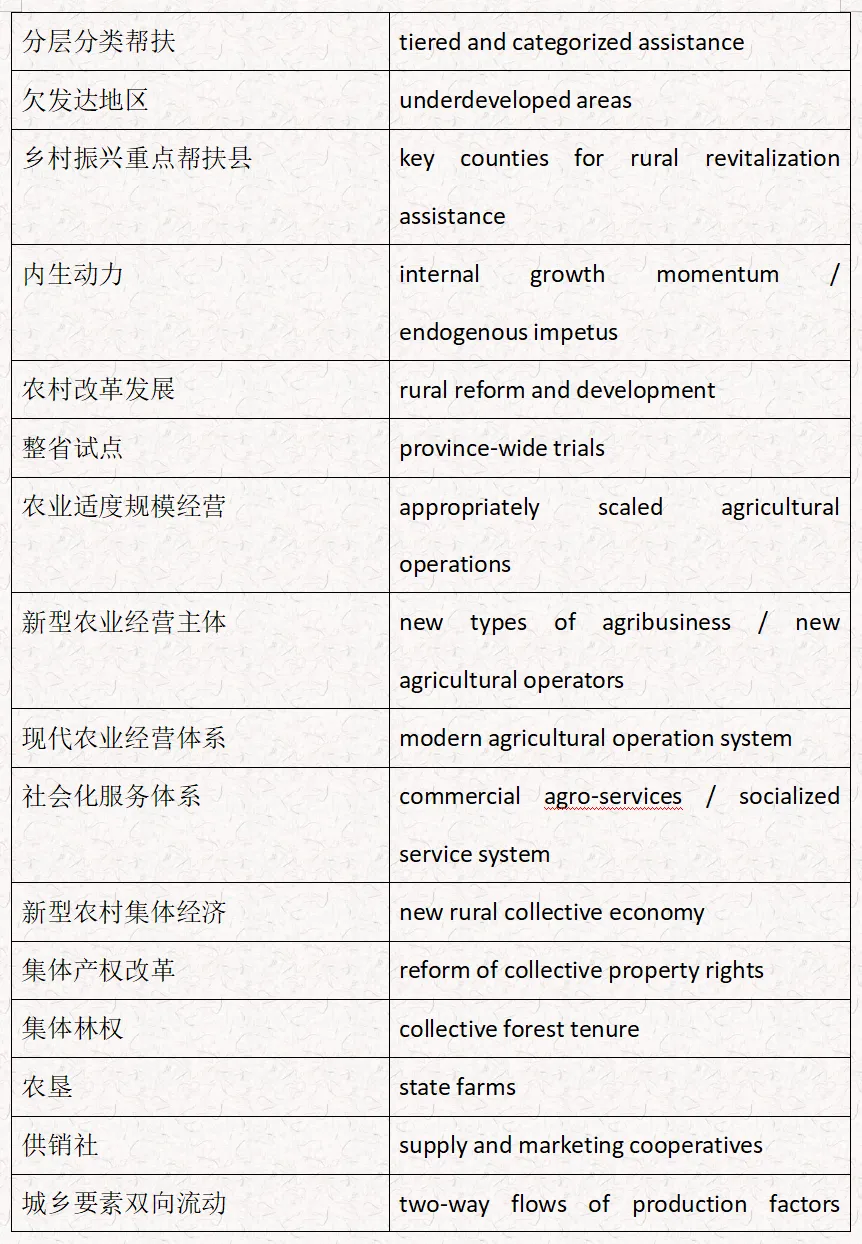
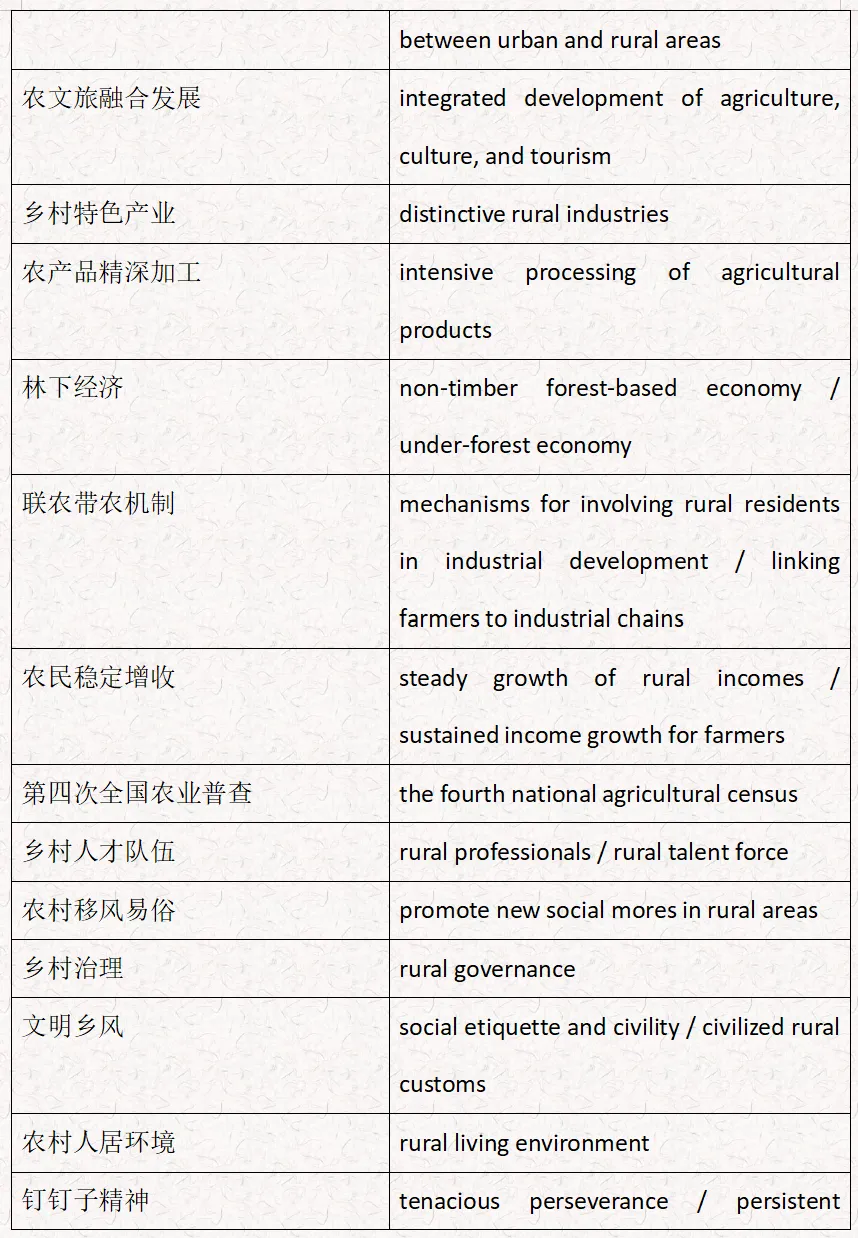
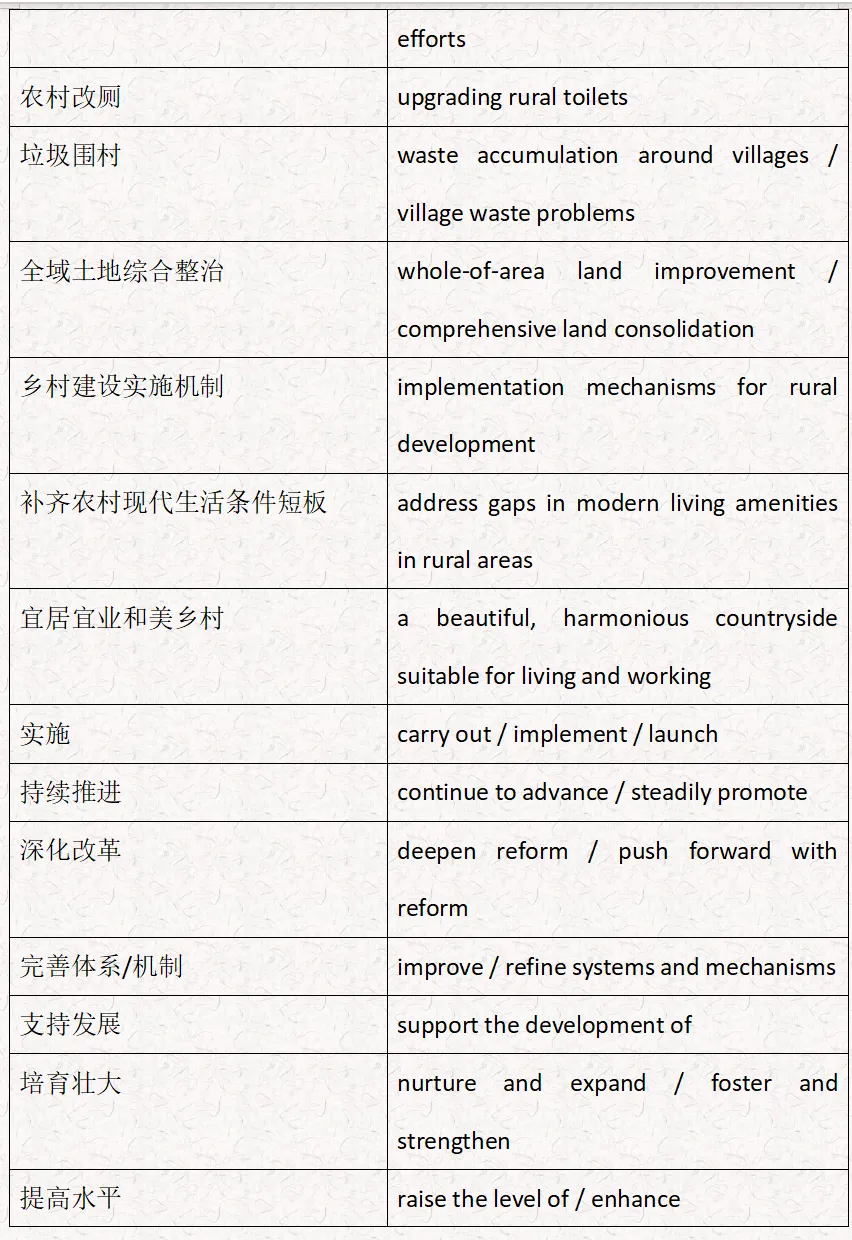
持续推进农村改革发展。全面开展第二轮土地承包到期后再延长30年整省试点,发展农业适度规模经营,发展新型农业经营主体,健全现代农业经营体系和社会化服务体系。支持发展新型农村集体经济。深化集体产权、集体林权、农垦、供销社等改革。开展第四次全国农业普查。推动城乡要素双向流动,深化农文旅等融合发展,培育壮大乡村特色产业,提高农产品精深加工水平,发展林下经济,完善联农带农机制,促进农民稳定增收。发展壮大乡村人才队伍。深化农村移风易俗,提升乡村治理和文明乡风建设水平。持续整治提升农村人居环境,以钉钉子精神解决好农村改厕、垃圾围村等问题。扎实推进全域土地综合整治。完善乡村建设实施机制,加快补齐农村现代生活条件短板,推进宜居宜业和美乡村建设。 | We will continue to advance rural reform and development. Province-wide trials on extending rural land contracts by another 30 years upon the expiration of the current second-round contracts will be conducted across the country. We will develop appropriately scaled agricultural operations, foster new types of agribusiness, and improve the framework for modern agricultural operations and commercial agro-services. Support will be provided for the development of new rural collective economies. We will push forward with the reform of collective property rights, collective forest tenure, state farms, and supply and marketing cooperatives. The fourth national agricultural census will be carried out. We will promote two-way flows of production factors between urban and rural areas and pursue integrated development of agriculture, culture, and tourism. We will nurture distinctive rural industries, boost the intensive processing of agricultural products, develop the non-timber forest-based economy, and refine mechanisms for involving more rural residents in local industry development, so as to sustain rural income growth. More rural professionals will be trained. Further efforts will be made to promote new social mores, improve governance, and enhance social etiquette and civility in rural areas. To further improve the rural living environment, we will make tenacious efforts to address issues such as upgrading toilets and clearing up waste. Initiatives for whole-of-area land improvements will be steadily advanced. We will refine mechanisms for implementing rural development initiatives, move faster to address modern amenity gaps in rural areas, and work to build a beautiful and harmonious countryside for people to live and work in. | |
(七)推动新型城镇化和区域协调发展。深入实施区域协调发展战略、区域重大战略、主体功能区战略和新型城镇化战略,构建优势互补、高质量发展的区域经济布局和国土空间体系。 | 7. Advancing new urbanization and coordinated regional development We should continue to implement the coordinated regional development strategy, major regional strategies, the functional zoning strategy, and the new urbanization strategy, with a view to developing a regional economic layout and a territorial space system that enable regions to leverage their complementary strengths in pursuit of high-quality development. | |
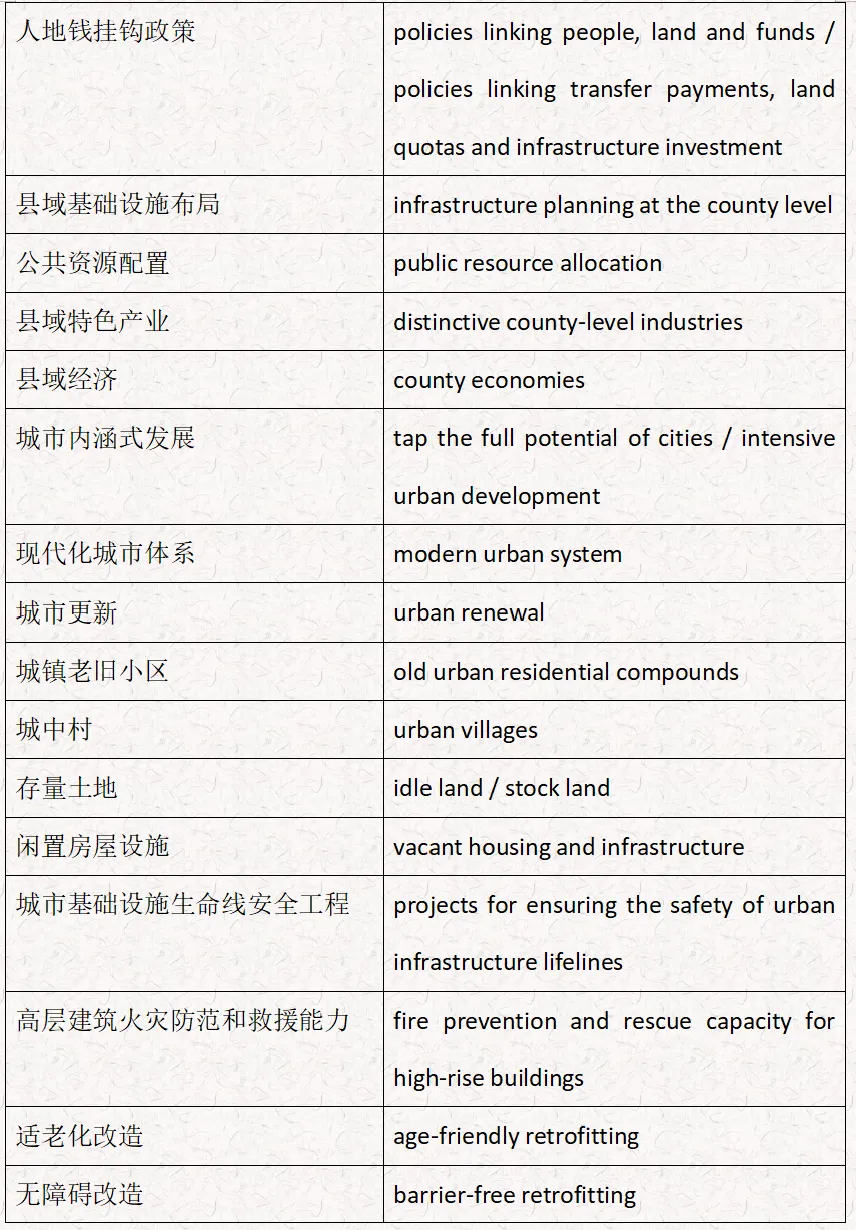
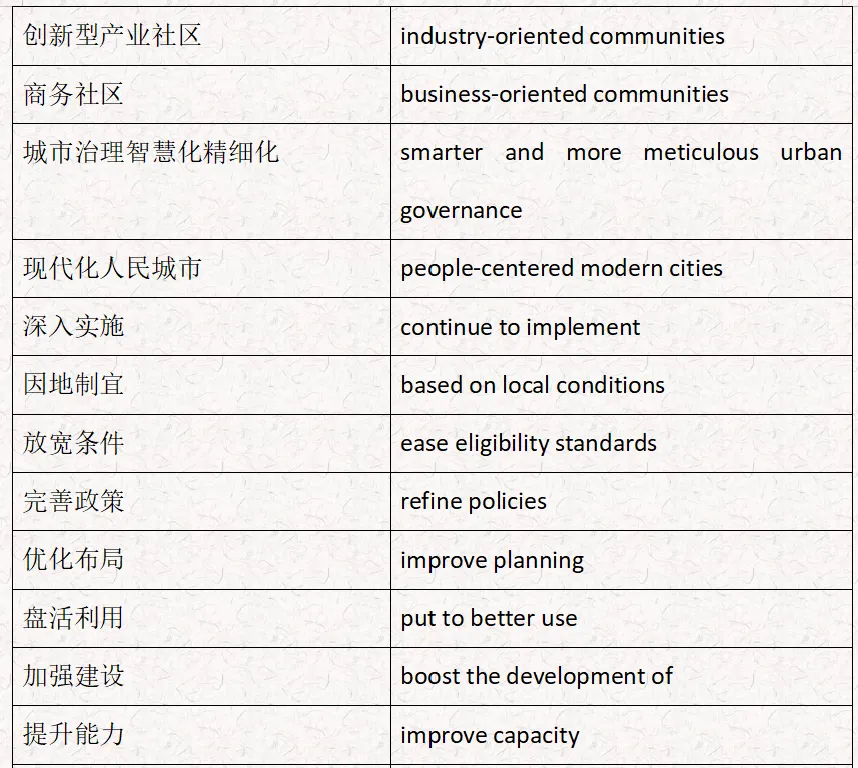
深入推进以人为本的新型城镇化。科学有序推进农业转移人口市民化,因地制宜放宽在流入地参加中考报名条件,进一步完善“人地钱”挂钩政策。优化县域基础设施布局和公共资源配置,发展县域特色产业,推动县域经济高质量发展。坚持城市内涵式发展,优化现代化城市体系。高质量推进城市更新,稳步实施城镇老旧小区、城中村等改造。盘活利用存量土地和闲置房屋设施。加强城市基础设施生命线安全工程建设,提升高层建筑火灾防范和救援能力。加强适老化和无障碍改造。建设创新型产业社区、商务社区,推动城市治理智慧化精细化,建设现代化人民城市。 | We will continue to promote people-centered new urbanization. Well-conceived and systematic measures will be taken to grant permanent urban residency to people who move to cities from rural areas. Based on local conditions, we will ease relevant eligibility standards so that more children of rural migrant workers can take high school entrance examinations in their current place of residence. We will continue to refine the policies for linking transfer payments, quotas for land newly designated for construction, and infrastructure investment to the number of urban residency approvals granted by local governments. We will improve infrastructure planning and public resource allocation at the county level and develop distinctive industries to promote high-quality development of county economies. We will continue to tap the full potential of cities and refine the modern urban system. We will pursue high-quality urban renewal by steadily renovating old urban residential compounds and urban villages. Idle land and vacant housing and infrastructure will be put to better use. We will boost the development of projects for ensuring the safety of urban infrastructure lifelines and improve fire prevention and rescue capacity for high-rise buildings. Efforts will be intensified to carry out age-friendly and barrier-free retrofitting. We will develop new types of industry-oriented and business-oriented communities, make urban governance smarter and more meticulous, and build people-centered modern cities. |
END……
如有相关疑问,欢迎留言,必将解答。
若对文章更新,排版问题等有所提议,欢迎留言。
精彩必看:


