目前“2026政报热词卡包”正在紧张更新中,会在CATTI考试前全部交付。
备考是细水长流的过程,大家可以先跟着推文节奏一点点积累。如果进度较快,可以先复习 2025 版卡包进行夯实,2026 版词条随后就到。
https://file.ankichinas.cn/card/628d9f5815eb8imb?share_info=5b0c87a9b27fcb4b8714411828abb2cehttps://geefoo.cn/app/pkg/304882?stk=8D287AF420PRACTICE 1_词条翻译
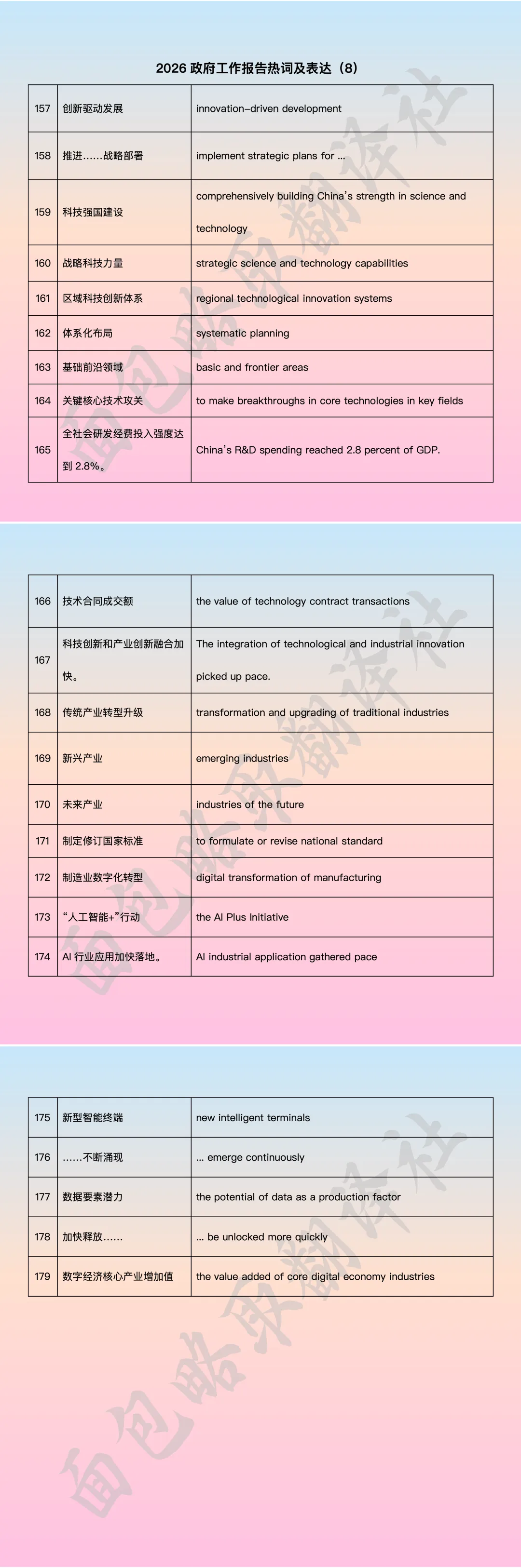
157 创新驱动发展
158 推进……战略部署
159 科技强国建设
160 战略科技力量
161 区域科技创新体系
162 体系化布局
163 基础前沿领域
164 关键核心技术攻关
165 全社会研发经费投入强度达到2.8%。
166 技术合同成交额
167 科技创新和产业创新融合加快。
168 传统产业转型升级
169 新兴产业
170 未来产业
171 制定修订国家标准
172 制造业数字化转型
173 “人工智能+”行动
174 AI行业应用加快落地。
175 新型智能终端
176 ……不断涌现
177 数据要素潜力
178 加快释放……
179 数字经济核心产业增加值
PRACTICE 2_视译练习
二是坚持创新驱动发展,建设现代化产业体系。全面推进科技强国建设战略部署,强化国家战略科技力量建设,完善区域科技创新体系,加强基础前沿领域体系化布局和关键核心技术攻关。全社会研发经费投入强度达到2.8%,技术合同成交额增长10.8%。科技创新和产业创新融合加快,传统产业转型升级不断深入,新兴产业、未来产业蓬勃发展,现代服务业保持快速发展势头。聚焦重点领域制定修订583项国家标准。持续推进制造业数字化转型和“人工智能+”行动,行业应用加快落地,新型智能终端不断涌现。数据要素潜力加快释放,数字经济核心产业增加值占国内生产总值的比重提高到10.5%以上。
2. We pursued innovation-driven development and continued to build a modernized industrial system.
We implemented strategic plans for comprehensively building China’s strength in science and technology. This included boosting strategic science and technology capabilities, improving regional technological innovation systems, reinforcing systematic planning for basic and frontier areas, and making breakthroughs in core technologies in key fields. Last year, China’s R&D spending reached 2.8 percent of GDP, and the value of technology contract transactions rose by 10.8 percent.
The integration of technological and industrial innovation picked up pace; transformation and upgrading of traditional industries continued; emerging industries and industries of the future achieved impressive growth; and rapid development was sustained in modern services.
A total of 583 national standards for key areas were formulated or revised. We moved ahead with digital transformation of manufacturing and the AI Plus Initiative. AI industrial application gathered pace, and new intelligent terminals emerged continuously. The potential of data as a production factor was unlocked more quickly, and the value added of core digital economy industries exceeded 10.5 percent of GDP.